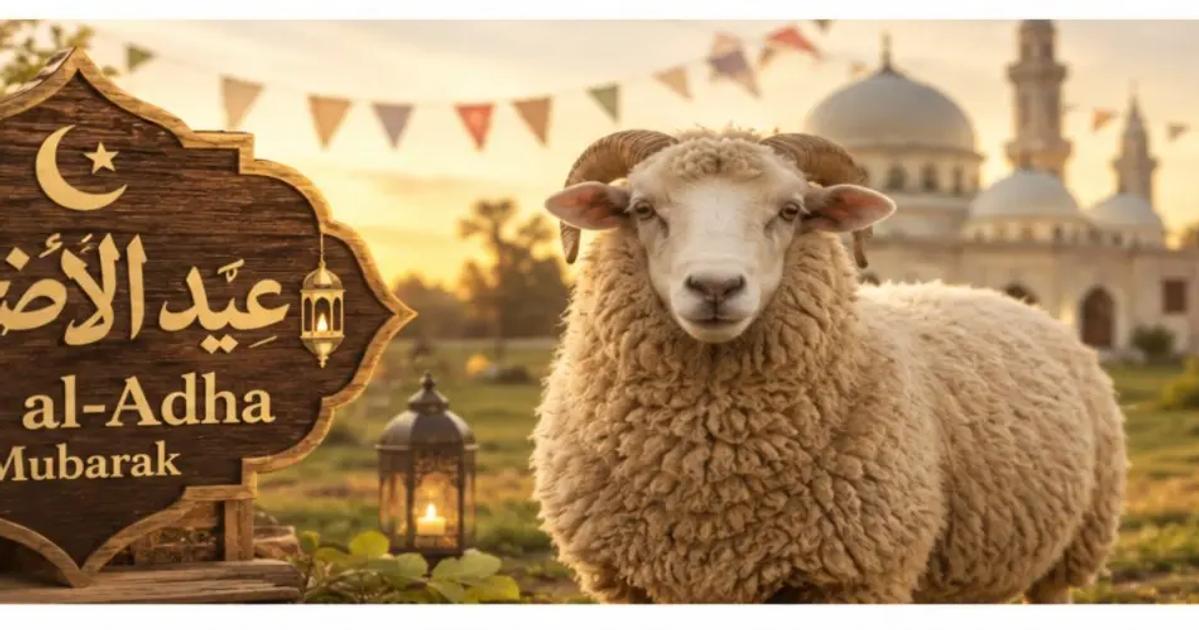
Eid al-Adha: The Festival of Sacrifice — Meaning, Rituals, and Lessons for Every Muslim
Eid al-Adha — عيد الأضحى — is one of the two greatest celebrations in Islam. But it is far more than a festive occasion. It is an annual school of faith, a living reminder of what it means to truly trust Allah, and a global act of worship that unites over 1.8 billion Muslims simultaneously.
Observed on the 10th day of Dhul-Hijjah, the final month of the Islamic lunar calendar, Eid al-Adha commemorates one of the most profound moments in prophetic history: the willingness of Prophet Ibrahim (Abraham, peace be upon him) to sacrifice everything — including his beloved son — in complete obedience to Allah's command.
In this post, we explore the full meaning of Eid al-Adha, its rituals, its connection to Hajj, and the timeless spiritual lessons it carries for every Muslim family.
The Story of Prophet Ibrahim (AS) — The Heart of Eid al-Adha
To understand Eid al-Adha, we must first understand the story it commemorates.
Allah (subhanahu wa ta'ala) commanded His beloved Prophet Ibrahim (AS) to sacrifice his son, Ismail — a test of absolute faith and unconditional obedience. Without hesitation, father and son both submitted to Allah's will. At the moment of sacrifice, Allah intervened, replacing Ismail with a ram from paradise as a divine mercy and a sign that Ibrahim had passed the greatest test a human being can face.
The Qur'an describes this moment of supreme surrender:
"And when he reached with him [the age of] exertion, he said: 'O my son, indeed I have seen in a dream that I [must] sacrifice you, so see what you think.' He said: 'O my father, do as you are commanded. You will find me, if Allah wills, of the steadfast.'" — Surah As-Saffat (37:102)
This act of submission — from both father and son — became the eternal foundation of Eid al-Adha. Every year, Muslims around the world re-enact the spirit of that sacrifice: surrendering what is precious to us for the sake of Allah alone.
When Is Eid al-Adha? The Sacred Days of Dhul-Hijjah
Eid al-Adha falls on the 10th of Dhul-Hijjah and continues for three to four days (the Days of Tashreeq). But the celebration does not begin on the 10th — it is preceded by ten of the most blessed days in the entire Islamic year.
The Prophet Muhammad ﷺ confirmed the status of these days in an authentic hadith:
"There are no days on which righteous deeds are more beloved to Allah than these ten days." — Sahih al-Bukhari
This means that the days before Eid al-Adha are not preparation for a party — they are days of intensified worship, spiritual readiness, and nearness to Allah. Muslims are encouraged during these ten days to:
- Fast — especially on the 9th (the Day of Arafah, which expiates sins of two years)
- Increase dhikr — Takbeer (Allahu Akbar), Tahmeed (Alhamdulillah), Tahleel (La ilaha illallah)
- Recite Quran with reflection and understanding
- Give charity generously to those in need
- Avoid cutting hair and nails (for those intending to offer the udhiyya sacrifice)
The Five Acts of Eid al-Adha Observance
1. Eid Prayer — Salat al-Eid
The day of Eid al-Adha begins before sunrise with bathing, wearing the best clothing, applying perfume, and heading to the mosque or prayer ground. The Eid prayer consists of two rak'ahs with additional takbeers and is followed by a khutbah (sermon). It is highly recommended for all Muslims — men, women, and children — to attend.
2. The Udhiyya (Qurbani) — The Sacrifice
The defining act of Eid al-Adha is the udhiyya: the sacrifice of a livestock animal (sheep, goat, cow, or camel) after the Eid prayer. This is the act that commemorates Ibrahim's sacrifice, and it carries extraordinary reward.
The Prophet Muhammad ﷺ said:
"The son of Adam does no action on the Day of Sacrifice more beloved to Allah than shedding blood (of the sacrificial animal)." — Jami at-Tirmidhi
Essential rules of the udhiyya:
- The animal must be healthy and free from major defects
- Age requirements: Sheep/goat — at least 1 year; Cow — at least 2 years; Camel — at least 5 years
- It must be sacrificed after the Eid prayer — not before
- One sheep or goat covers one household; one cow or camel may be shared among seven people
- The intention must be made sincerely for Allah alone
3. Distributing the Meat — Three Equal Portions
Islamic tradition divides the udhiyya meat into three parts:
- One-third for the household
- One-third for relatives and neighbours
- One-third for the poor and those in need
This division is not merely a custom — it is an expression of Islam's deep commitment to social equity and care for the vulnerable. On a day of celebration, no one in the community should go without.
4. The Eid Takbeer — Declaring Allah's Greatness
From the dawn of the 9th of Dhul-Hijjah until the end of the Days of Tashreeq (13th), Muslims across the world repeat the Eid takbeer:
اللَّهُ أَكْبَرُ، اللَّهُ أَكْبَرُ، لَا إِلَهَ إِلَّا اللَّهُ، وَاللَّهُ أَكْبَرُ، اللَّهُ أَكْبَرُ، وَلِلَّهِ الْحَمْدُ
Allahu Akbar, Allahu Akbar, La ilaha illallah, Allahu Akbar, Allahu Akbar, wa lillahil hamd.
This communal declaration fills mosques, streets, and homes with the remembrance of Allah — a powerful sound that marks the days of Eid as unlike any other.
5. Family Gathering and Celebration
Eid al-Adha is a time for hearts to reunite. Families visit relatives, share meals, exchange warm greetings, and express gratitude to Allah for His blessings. Children wear new clothes, the scent of food fills homes, and the joy of the occasion is felt by every member of the community. This celebration is not separate from worship — it is a form of worship in itself.
Eid al-Adha and Hajj — A Global Act of Worship
Eid al-Adha coincides with the final days of Hajj — the fifth pillar of Islam. As pilgrims stand on the plain of Arafah and circle the Ka'bah, Muslims worldwide join them spiritually through prayer, sacrifice, and remembrance.
The Day of Arafah (9th Dhul-Hijjah) is considered by scholars to be one of the most sacred days of the year. For those not performing Hajj, fasting on this day is one of the most powerful acts of worship available. The Prophet ﷺ said about it:
"It expiates the sins of the previous year and the coming year." — Sahih Muslim
Eid al-Adha is therefore not just a celebration — it is a moment when the entire Muslim ummah, across every continent and culture, is spiritually united in the worship of Allah.
Spiritual Lessons of Eid al-Adha
The Festival of Sacrifice carries lessons that are as relevant today as they were in the time of Prophet Ibrahim (AS):
🌿 Tawakkul — Trust in Allah Ibrahim's story teaches that true reliance on Allah means submitting even when we cannot understand His wisdom. He trusted, and Allah provided.
🌿 Sabr — Patience in Trials Both Ibrahim and Ismail faced an incomprehensible trial with steadfast patience. Sabr in hardship is one of the most beloved qualities to Allah.
🌿 Karam — Generosity The distribution of meat to the poor is not optional charity — it is a pillar of the celebration. Islam connects every act of worship to social responsibility.
🌿 Rahmah — Compassion Eid al-Adha reminds us that the blessings we receive are not for us alone. Compassion toward the poor, the neighbour, and the stranger is an act of worship.
🌿 Tawhid — Pure Monotheism Every element of Eid al-Adha — the prayer, the sacrifice, the takbeer — is an act of worship directed exclusively to Allah. It is a celebration of the central truth of Islam: there is no god worthy of worship except Allah.
How to Celebrate Eid al-Adha With Your Children
For Muslim families raising children in the West, Eid al-Adha is a powerful opportunity to connect the next generation to their faith. Consider:
- Reading or narrating the story of Prophet Ibrahim together before Eid
- Taking children to the Eid prayer and explaining its significance
- Involving them in the process of distributing meat to neighbours or a local food bank
- Encouraging them to make their own list of things they are grateful to Allah for
Understanding why we celebrate — not just how — builds a faith that lasts a lifetime.
Frequently Asked Questions About Eid al-Adha
Is fasting allowed on the day of Eid al-Adha? No. Fasting on the 10th of Dhul-Hijjah (Eid al-Adha) is prohibited in Islam. It is a day of celebration, gratitude, and communal eating. However, fasting on the 9th (Day of Arafah) is highly encouraged for those not performing Hajj.
Is Qurbani (the sacrifice) obligatory or Sunnah? Scholars differ on this. The Hanafi school considers Qurbani wajib (obligatory) for every financially capable adult Muslim who possesses the nisab. The majority of other schools consider it a highly emphasised Sunnah (Sunnah Mu'akkadah). Consult your local scholar for guidance according to your madhab.
Can I offer Qurbani on behalf of deceased relatives? Yes. Scholars permit offering a voluntary udhiyya on behalf of deceased parents or relatives as sadaqah jariyah (ongoing charity). The reward is sent to them, insha'Allah.
What is the difference between Eid al-Adha and Eid al-Fitr? Eid al-Fitr marks the end of Ramadan — the month of fasting. Eid al-Adha marks the culmination of Hajj and commemorates Ibrahim's sacrifice. Both are occasions of prayer, gratitude, and community, but their contexts and rituals are distinct.
What dua should I say on Eid al-Adha? Among the recommended supplications: "Taqabbalallahu minna wa minkum" (May Allah accept from us and from you). This is the traditional Eid greeting exchanged between Muslims.
Deepen Your Understanding of Islamic Occasions
If this post sparked questions about Islamic history, hadith, or the stories of the prophets, Mihrab Academy offers structured online courses in Islamic Studies, Quran, and Arabic — designed for students of all ages and levels.
Sources: Sahih al-Bukhari (Hadith on the ten days of Dhul-Hijjah) · Jami at-Tirmidhi (Hadith on the sacrifice) · Sahih Muslim (Hadith on fasting Arafah) · Surah As-Saffat, Ayah 102